
Einleitung
You have an open role. You write the ad, you publish it, and then not much happens. That is no reason to panic, but it is a good reason to look more closely. Whether a job ad gets found depends on how well it is written, and also on whether it fits the rules of job search engines like Indeed. Those rules shifted twice in 2026.
This guide is for anyone who writes and posts job ads themselves at mid-sized companies (the German Mittelstand) or in smaller teams: HR, recruiting, or a managing director who handles hiring alongside everything else. It covers the levers that decide visibility and application numbers, from the job title to text length and the details every ad needs, through to why an ad with perfect content has not been enough on its own since the end of 2025.
The good news first: most of these levers cost no extra budget, only ten minutes of editing on an ad you already have. The less welcome news is that the ground rules shifted in 2026. If you have been posting ads the same way for years, you are quietly losing visibility, even though nothing in the text itself has changed.
TL;DR
- Around 36% of job seekers search for the exact job title. A vague title shuts you out of those searches (Indeed, Aug 2026).
- Indeed itself gives a range of 50 to 60 characters for job titles and advises against going over 80 characters (Indeed, Aug 2026).
- According to Indeed's own data, job ads between 700 and 2,000 characters get up to 30% more applications (Indeed, Aug 2026).
- Indexed jobs that list pay, working hours and benefits get 50% more apply starts (Indeed, Aug 2026). Even so, only around 12% of German job ads show a salary (Indeed Hiring Lab, May 2026).
- More than 90% can picture searching for jobs on a mobile device, but only 33% would also apply on one, which makes the title and the structure of the ad especially important (softgarden/FH Heilbronn, Dec 2024).
- Since December 2025, free ads on Indeed have been capped more tightly. Since 31 March 2026, many feed-based ads without an ATS connection have also lost their organic visibility (Job Board Doctor, Dec 2025; Fountain, 2026).
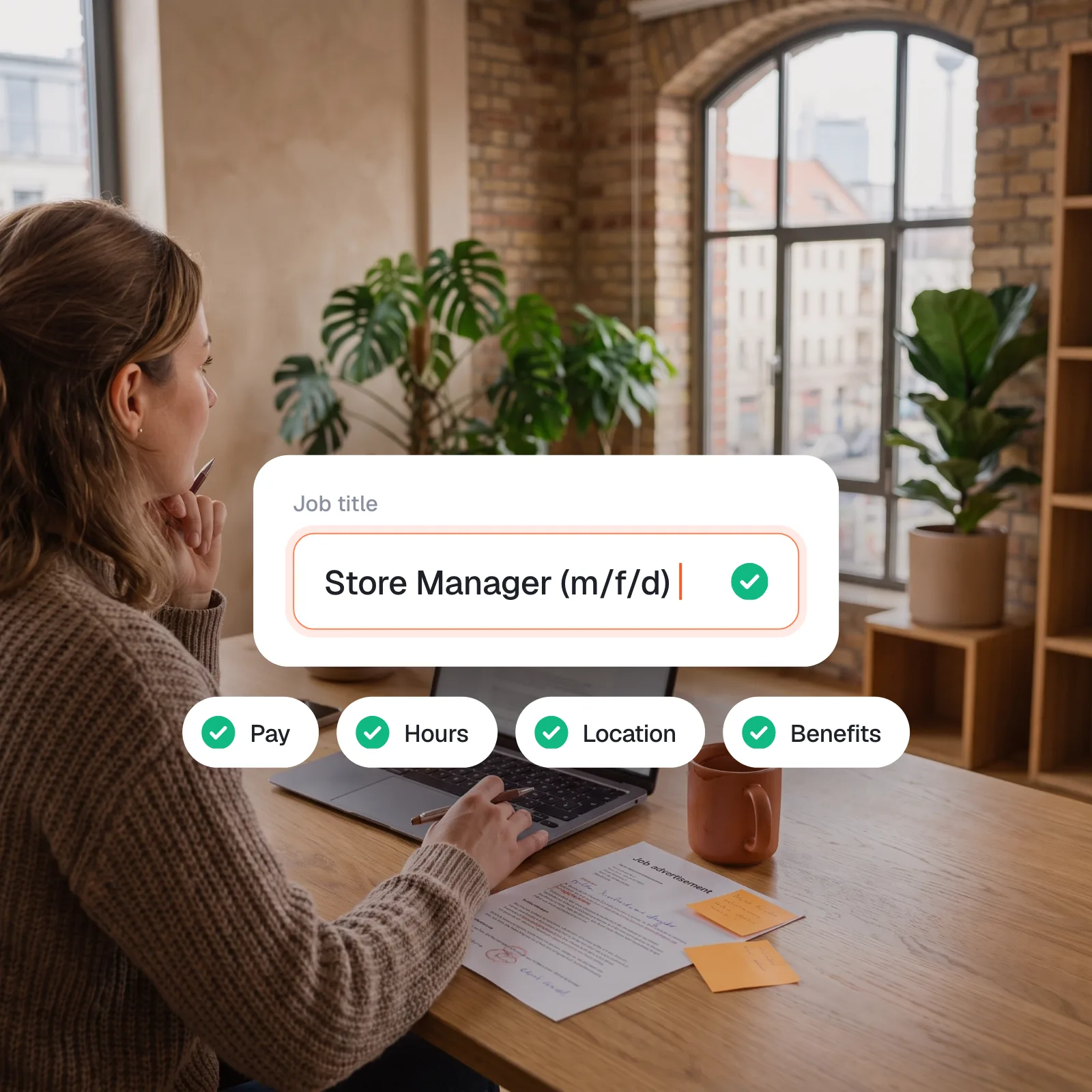
Why does the job title decide whether your ad gets seen at all?
Because a large share of job seekers do not search broadly. They search for a specific job title. By Indeed's own figures, around 36% of job seekers search for the exact job title (Indeed, Aug 2026). A creative but unusual title like "Digital Growth Ninja" may be fun internally. For this group of searchers the role does not exist, because nobody types it into a search box.
Title length plays a part too. Indeed recommends job titles in the range of 50 to 60 characters and explicitly advises against going over 80 characters, because titles that are too long or too short can perform worse in search (Indeed, Aug 2026).
| Title length | Indeed's assessment |
|---|---|
| Under 50 characters | Usually fine, but can end up too vague |
| 50–60 characters | The target range Indeed recommends |
| 60–80 characters | Still acceptable, but already risky |
| Over 80 characters | Explicitly not recommended by Indeed |
Here is how to go about it. Use the job title people search for (for example "Elektroniker", the German term for an electronics technician, rather than "Technical Solutions Specialist"). Stay within the recommended character range. Keep internal job codes, department names and marketing speak out of the title itself: they belong in the body text, not in the headline.
Sometimes the title your company uses internally differs from the one people search for externally, for example "Sales Development Representative" internally versus "Vertriebsmitarbeiter Außendienst" (field sales representative) in Google and Indeed searches. In that case a two-track approach pays off. The public title follows what people search for, and the internal title stays in the ATS or in the job description. When you are unsure which title works better, test two versions in parallel as separate single postings and compare application numbers after one to two weeks, instead of deciding on gut feeling.
How long should the job ad text be?
Between 700 and 2,000 characters including spaces, according to Indeed's own analysis of its platform data. In that range, ads get up to 30% more applications than shorter or longer texts (Indeed, Aug 2026). Too short looks incomplete. Too long loses readers along the way, especially on a phone.
What surprises many people is that the body text also has a measurable effect on application numbers. The title is not the only thing that counts. So the rule of thumb is: a compact, complete ad beats a half-page company portrait with a job description tacked on at the end. Break the text into short paragraphs of three to four sentences so it still works when someone skims it.
A structure that works well in practice: a short opening on the company and the team in two to three sentences, the tasks as a list, not a wall of text, realistic requirements rather than a wish list, concrete benefits in place of the stock phrase "nice team", and a clear application path that asks as little of candidates as possible. Build all six details from the next section into this structure and most roles land in the recommended character range on their own, without any padding.
Which six details do candidates look for first?
Job seekers first scan an ad for a handful of concrete details. Missing even one of them is enough for many to rule the ad out straight away. Indeed's own analysis shows how strong the effect is: indexed jobs that include pay, working hours and benefits get 50% more apply starts than ads without them (Indeed, Aug 2026).
| Detail | Why candidates look for it |
|---|---|
| Pay | Often the first filter. If it is missing, many drop off right away |
| Employment type | Full-time, part-time, fixed-term or permanent: does the job fit their life? |
| Requirements | Clear qualifications, so people can judge their own fit quickly |
| Working hours / shift | Can the job fit around everyday life? |
| Location | The exact work address. Many only search within a certain radius |
| Benefits | Insurance, vacation or other benefits as an extra deciding factor |
Put all six details as high up in the ad as you can, instead of hiding them in the third paragraph. Once you consider how few seconds job seekers spend on each ad, it is easy to see why this is not optional.
In practice, pay is the detail most often missing, followed by concrete working hours. Neither can be replaced with nice wording. An ad that says "We offer attractive terms" instead of naming a figure does not strike most readers as generous. It strikes them as evasive. If one of the six details is still open for organizational reasons, such as the exact shift schedule, an honest line like "Shift schedule to be agreed in the interview" is better than leaving it out altogether.
Is it worth stating the salary?
Yes, on two levels: with candidates, and soon legally as well. In a survey across several European countries, 61% of respondents in Germany said they were more likely to apply for a job that shows a salary range (Indeed Hiring Lab, May 2026). The same report shows that as of March 2026, only around 12% of German job ads include any salary information at all. That is a wide gap between what candidates expect and what employers do.
Legally, that gap is narrowing. The deadline for transposing the EU Pay Transparency Directive expired on 7 June 2026, and Germany let it pass. There is no national implementing law yet, and one is not expected before 2027 (gogeogo.com, 2026). Stating a range now gives you an edge with candidates and puts you one step ahead of the obligation that is coming.
Even a rough range such as "€45,000–52,000 gross per year, depending on experience" builds more trust than no figure at all, and it saves both sides time later in the process. People for whom the range does not work drop out early, so you do not have to find out in the first interview, after both sides have already invested time.
If you are still hesitant, introduce salary information step by step: first for the roles that are hard to fill anyway, then gradually for the rest. That takes the heat out of internal resistance without giving up the visibility and trust effect entirely, and it buys time until a binding German rule takes effect.
What hurts your ad even though it is well meant?
Mainly two things that lead people away from the actual application path: contact details in the ad text, and external links. Indeed itself recommends using its messaging and email features only for communication about a specific application, rather than sending candidates to an external channel. It also explicitly prohibits external links and QR codes in job ad photos (Indeed, Aug 2026).
The practical reason: when you send candidates out of Indeed's application flow to an email address or an external form, you leave the path the platform is built around. Stick to the intended application path instead. Short, clear, no detours.
The same goes for lines like "If interested, please send an informal application to bewerbung@firma.de" in the middle of the ad text. It may be meant kindly, but it opens a second, unstructured application path next to the real one. That doubles the upkeep for you, and you lose the benefit a single application path brings when you evaluate your channels.
Why is mobile-first no longer optional?
Because most job searches now start on a smartphone, even though fewer applications are completed there. In a study by softgarden with Heilbronn University of Applied Sciences (Hochschule Heilbronn), more than 90% of respondents said they could picture searching for jobs on a smartphone or tablet. For the application itself, that figure fell to only 33%, because many people find small screens impractical for filling in forms (softgarden/FH Heilbronn, Dec 2024).
For your ad, that means the title, the salary and the location have to be visible on a small screen without scrolling. This is why the character length from the first section counts double here. The application path itself should be as short and friction-free as possible, so that your ad is not the reason the gap between searching on mobile and applying on mobile gets wider. Before you publish, read the ad through once on a phone as well as on a desktop.
In concrete terms: short paragraphs instead of sprawling sentences, bullet points instead of nested clauses, and the most important content high enough to be visible without scrolling. If your ad looks good on a desktop but turns into a gray wall of text on a phone, you lose attention at the exact moment when most of the searching happens, even if the application itself is then more likely to be completed on a computer or tablet.
Why is updating worth more than reposting?
Because Indeed treats regular, repeated reposting of the same job as duplicate content. Under Indeed's own guidelines, frequent reposting or duplicate content can lead to lower ranking in search, or require sponsorship to stay visible. The recommendation is therefore to update an existing ad instead of creating a new one (Indeed, Aug 2026).
It also pays off because digital channels are carrying more weight in recruiting overall. According to the IAB Job Vacancy Survey (IAB-Stellenerhebung) from Germany's Institute for Employment Research, online job portals, the company's own website and social media together were decisive in 52% of successful hires in 2025, up from 47% in 2024 (IAB-Forum, Jun 2026). To stay visible in a field that is growing and getting more crowded at the same time, keep a live ad up to date rather than letting it run unchanged, and take filled roles offline promptly.
A simple rhythm is usually enough. Go through the ad once every two to three weeks and adjust a phrase or add a requirement. What you want to avoid is an ad that sits unchanged for months. This is not effort that only pays off for high-priority roles. For hard-to-fill roles in particular, the visibility a neglected ad loses adds up over the weeks into a real competitive disadvantage against other employers' freshly maintained ads.
What is changing in 2026 for free visibility on Indeed?
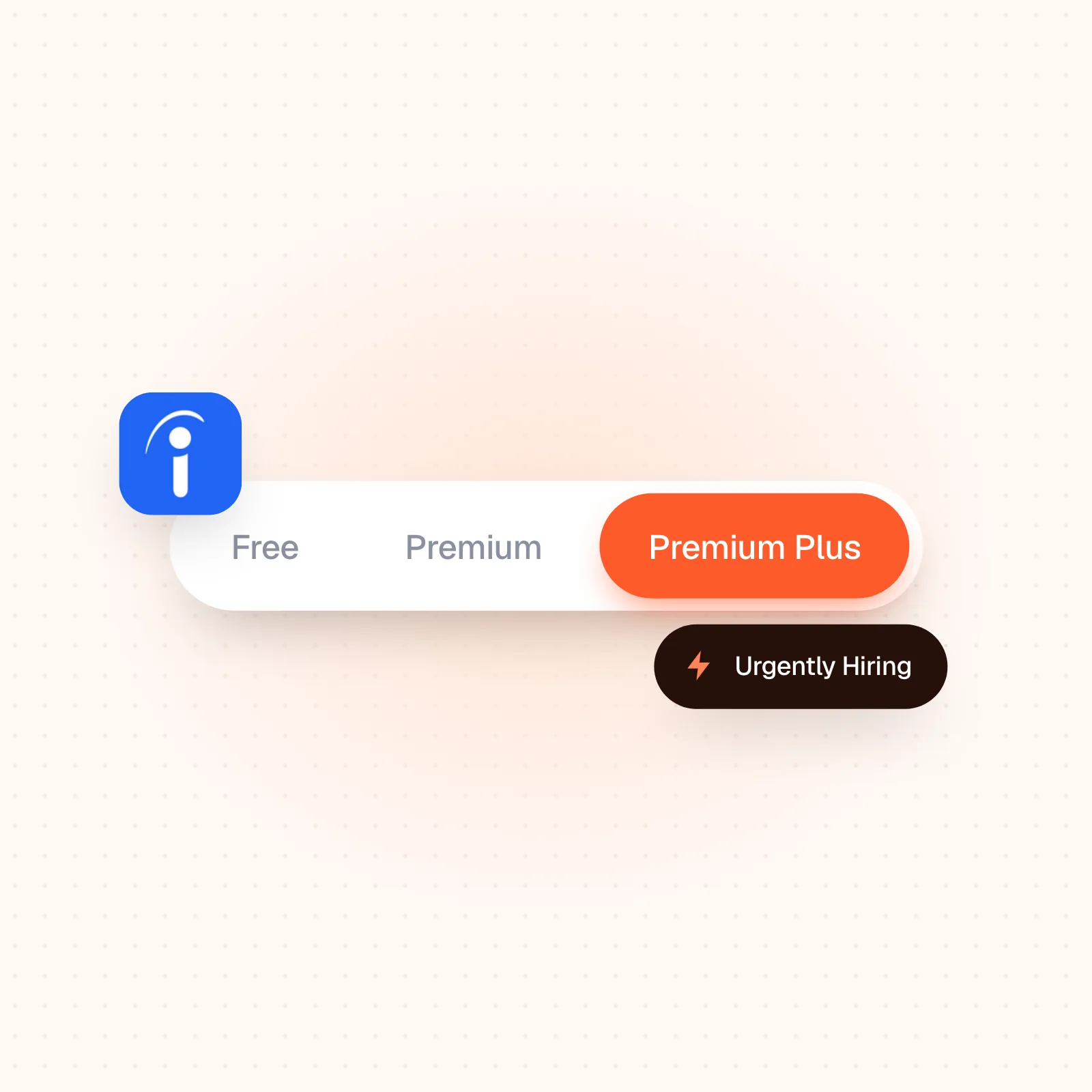
It is shrinking, in two steps. Since October 2024, Indeed's "Healthy Marketplace" initiative has aimed to rank free listings below paid ads (Landed, 2026). In December 2025 that became concrete. Free ads posted directly on Indeed are now capped at three per employer per calendar month and stay organically visible for only up to 30 days, down from 120 days before. This applies in Germany too (Job Board Doctor, Dec 2025; Indeed, Aug 2026).
A second restriction has applied since 31 March 2026. Jobs sent in through a single-source XML or API connection without a supported ATS with Indeed Apply no longer receive free organic visibility. That includes an agency's optimized or "wrapped" feed, even when the underlying ATS would in fact support Indeed Apply (Fountain, 2026; College Recruiter, Mar 2026).
| Period | What applied |
|---|---|
| Until end of 2025 | Free direct ads organically visible for up to 120 days |
| From December 2025 | Max. three free ads per month, organically visible for only 30 days |
| From 31 March 2026 | Feed ads without an ATS connection with Indeed Apply also get no free organic visibility |
So an ad with perfect content is no longer enough on its own if there is neither budget nor a suitable ATS connection behind it. In practice, the first step is to check which route your ads take to reach Indeed. If they go through an ATS that supports Indeed Apply, little changes for you. If they go through an agency XML feed or a distributor feed without that connection, now is the time to either switch the setup or make a deliberate decision to sponsor those ads. Otherwise you end up looking for the cause only after applications have visibly dropped, wondering why a previously reliable ad suddenly brings in hardly any applications.
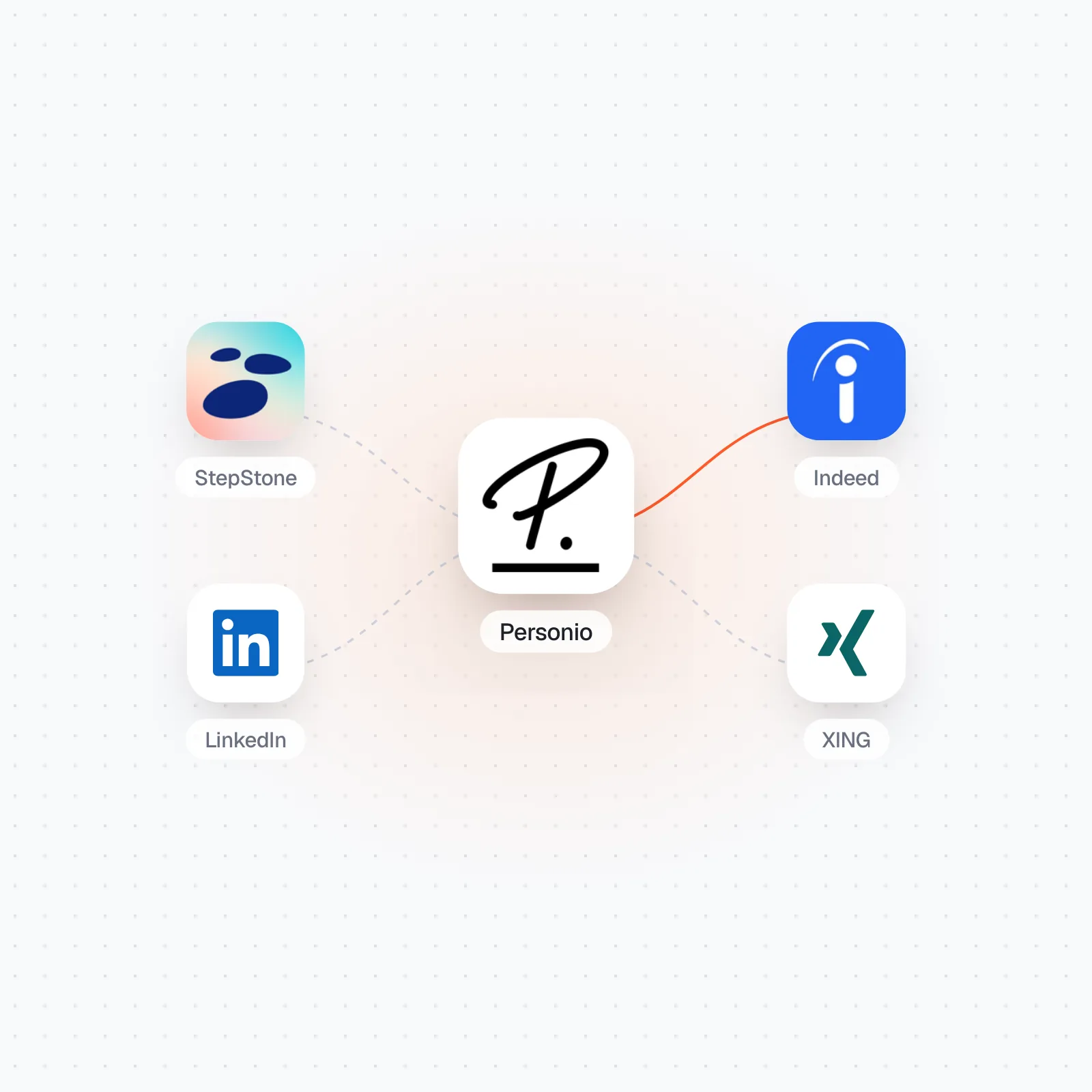
Indeed matters in the German-speaking market (DACH), but it is not the only relevant platform. StepStone, LinkedIn and Google for Jobs play a part as well. If you maintain a job ad once and distribute it to several channels automatically, without handling each platform separately, you depend less on any single platform's policy changes. That is what Job-Sync is built for. If you post your ads straight from your ATS, for example from Personio, you are also more likely to benefit from the ATS exceptions Indeed makes for feed ads. And if you want to measure which channel brings which applications, and not guess, you need a view of the metrics per channel. The total number of applications alone will not tell you.
with your stack?


Writing the ad is the first half. Want to get your job ads onto the right channels and measure what they bring in? That is what we help with at Kini. If you would like to know whether your setup could cover more channels, talk to us. No pitch, just a look at your channels.