


Recruiting data has to move between systems that were never built to talk to each other.
An applicant tracking system holds the jobs. A job board holds the audience. An agency sits between them and works across every client's system. Every pair needs a connection, and every connection needs someone to keep it alive.
That work stays invisible until it breaks. A field gets renamed, a token expires or an endpoint is deprecated, and applications stop arriving before anyone notices. Many teams have no engineers to spare for it.
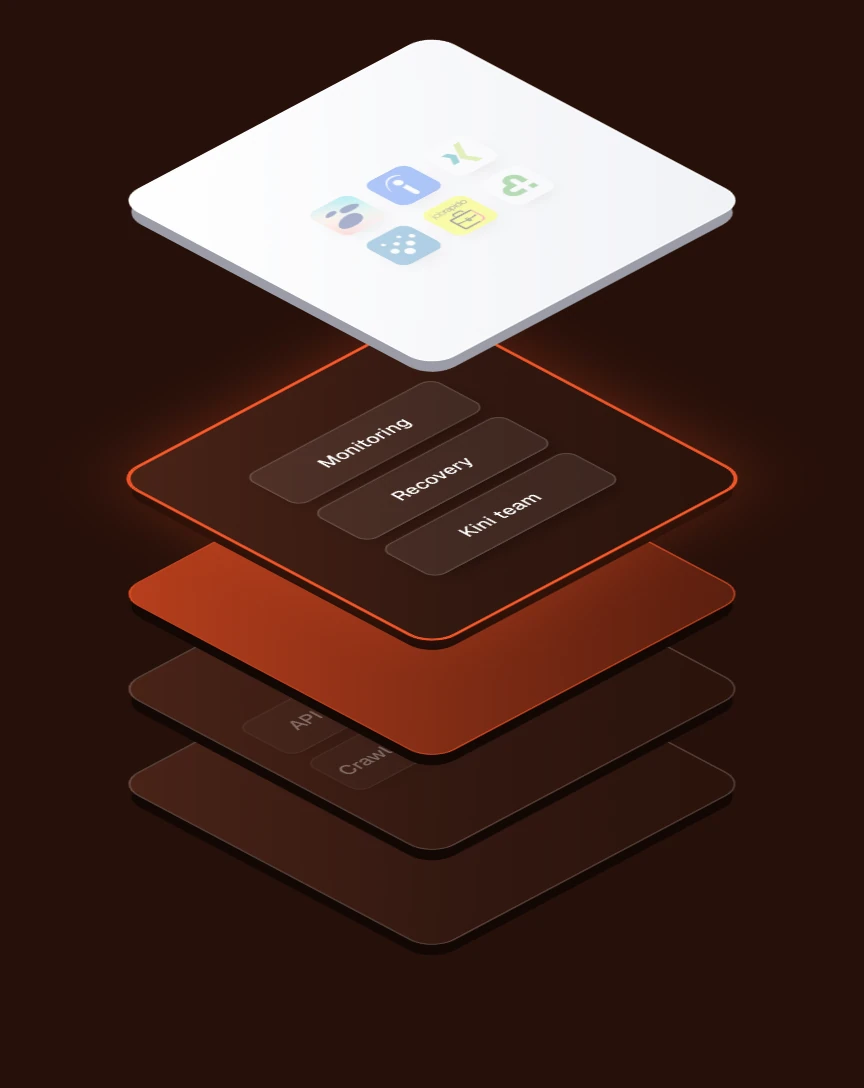
Building the integration was never the hard part. Operating it was. So we take over the whole connection, including monitoring and maintenance.
not another tool.
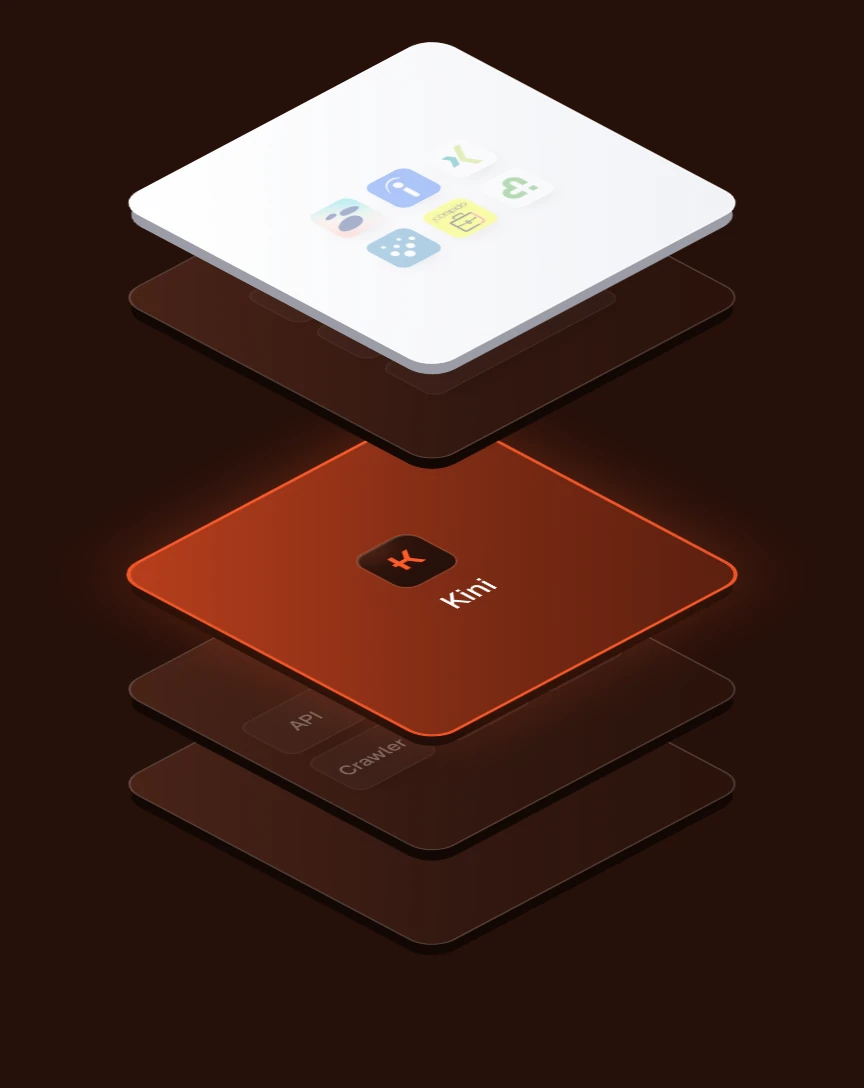
Jobs go out from the ATS, applications come back in, and Kini is the layer in between that keeps both directions working.


The system of record stays where it is.
We move data between systems. Nobody has to replace an ATS to work with us.
A new partner costs no engineering on your side.
Once we have the credentials, connecting takes minutes, not weeks. If a connection still needs engineering from the customer, we are not done yet.
Every integration is operated, not just delivered.
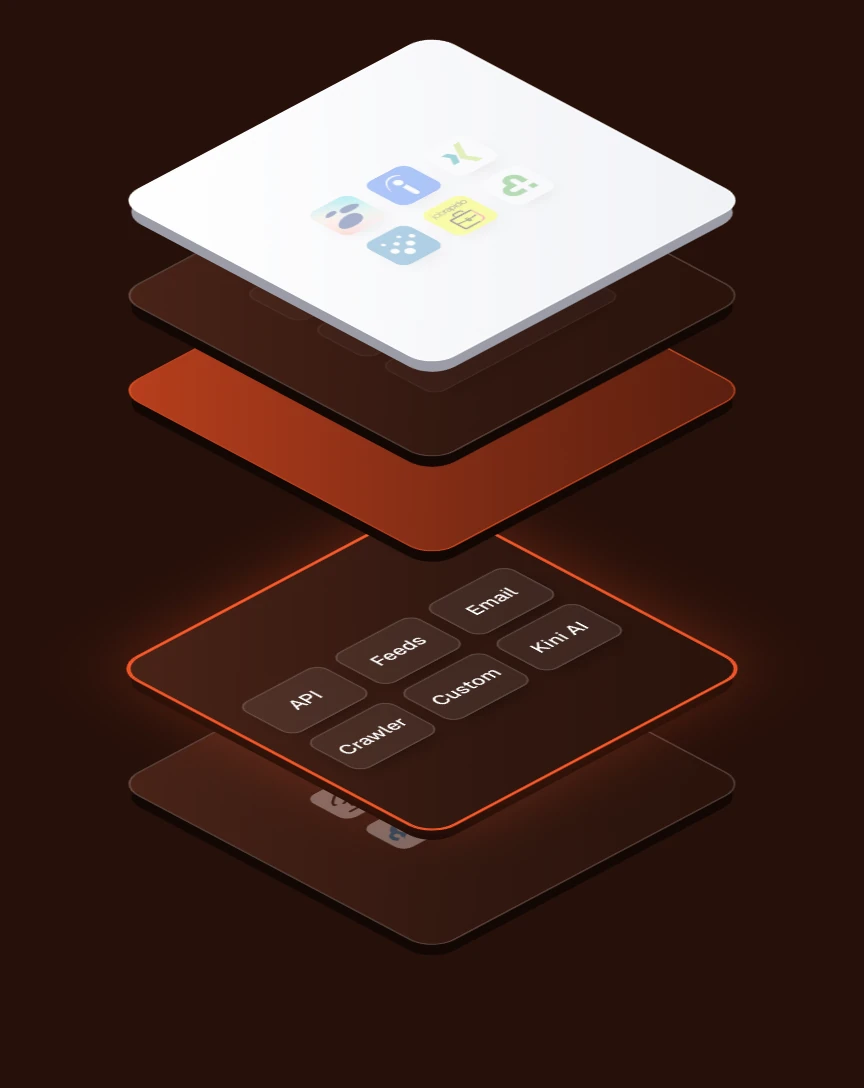
API where one exists. Feeds, email or custom routes where it does not. Either way, we monitor it and fix it when it breaks.
at the same table.
Kini works for ATS providers, recruiting agencies and job boards, and through them for the employers who hire. Each of them sits on a different side of the same connection.

Your customers keep asking for integrations.
You ship them without owning the maintenance. Kini connects your ATS to the channels and agencies your customers already use, and keeps those connections running.
Kini for ATS platforms →
One seat for every client's system.
Clients often run different ATS. Kini keeps them apart and connected at the same time, so candidates reach the right system.
Kini for recruiting agencies →
Listings where recruiters already work.
One standardized way into the systems recruiters use every day. Jobs go out, applications come back, and you see how your listings perform.
Kini for job boards →
Post a job. Get the applications.
For employers, the connection behind their hiring should be invisible. Everything we do for the other three seats exists so that this part stays boring.
Kini for employers →stated before you sign.
The terms that usually hide in a contract appendix, written down here first.
No setup fee, twelve-month term.
There is no setup fee. The minimum term is twelve months, and we would rather say that here than in a footnote.
Thirty days to change your mind.
You can leave within the first thirty days, without giving a reason and without paying.
Applicant data is deleted or anonymized after 180 days.
Your customers do not have to manage retention themselves.
We watch the connections, not a clock.
We do not publish an availability number. Anomaly detection is live, and our team steps in when a connection fails.
on both ends of this problem.
The problem before the company
Julia and Fabian came to the same problem from two sides, one from the technology and one from the partners. In recruiting, every new partner means another connection, and every connection can quietly stop working. Nobody owned keeping them alive.

Founded as Qonexon
They founded the company in 2023 under the name Qonexon, to build the layer they would have needed themselves.
A new name, the same infrastructure
Qonexon announced its new name: Kini. The infrastructure did not change, only the name did.
Pre-seed round
The company raised its pre-seed round, led by bmh Hessen, together with Vimajo and a group of business angels.
Seed round
The existing investors backed Kini again in the seed round, once more led by bmh Hessen, and new business angels joined them.
The team in Berlin
The company is registered in Stadtallendorf, and the team works from Berlin.
behind the layer.
We work in three functions: engineering, operations and partner management.

Fabian Scheib

Responsible for partnerships and the commercial side at Kini, the part of the business that brings new ATS, agencies and job boards onto the layer.

Julia Komkowski
Responsible for product, engineering and the technical direction at Kini, with deep domain expertise in ATS integrations.

Aaryan Pagar
Full-stack engineer working across frontend and backend, primarily responsible for building Kini Shop.

Julian Stranzky
Often the first person partners and customers speak to, bringing in the tech team when a question turns technical.

Emil Sallem
Works on infrastructure and DevOps, looks after Kini's cloud and helped build Kini AI.

Chiara Konrads
Makes sure the details add up in day-to-day operations, from price lists to invoices.
We're a B2B2B business. Our partners' customers feel the value, so we treat their reputation as ours.


The people who designed the layer are the people you reach when it breaks.
Every integration is built and monitored by us, not handed to a support queue.
We struck two coverage figures because nobody had validated them.
Three functions, small enough that nothing gets lost between them.